PROJECT OVERVIEW
At Casper, I led product design on UX experimentation initiatives during a high-growth Series B phase. This case study covers a cross-sell redesign within the e-commerce checkout — a project that delivered statistically significant lift across attachment rates and revenue per user, at a sample size of 466,000 users.
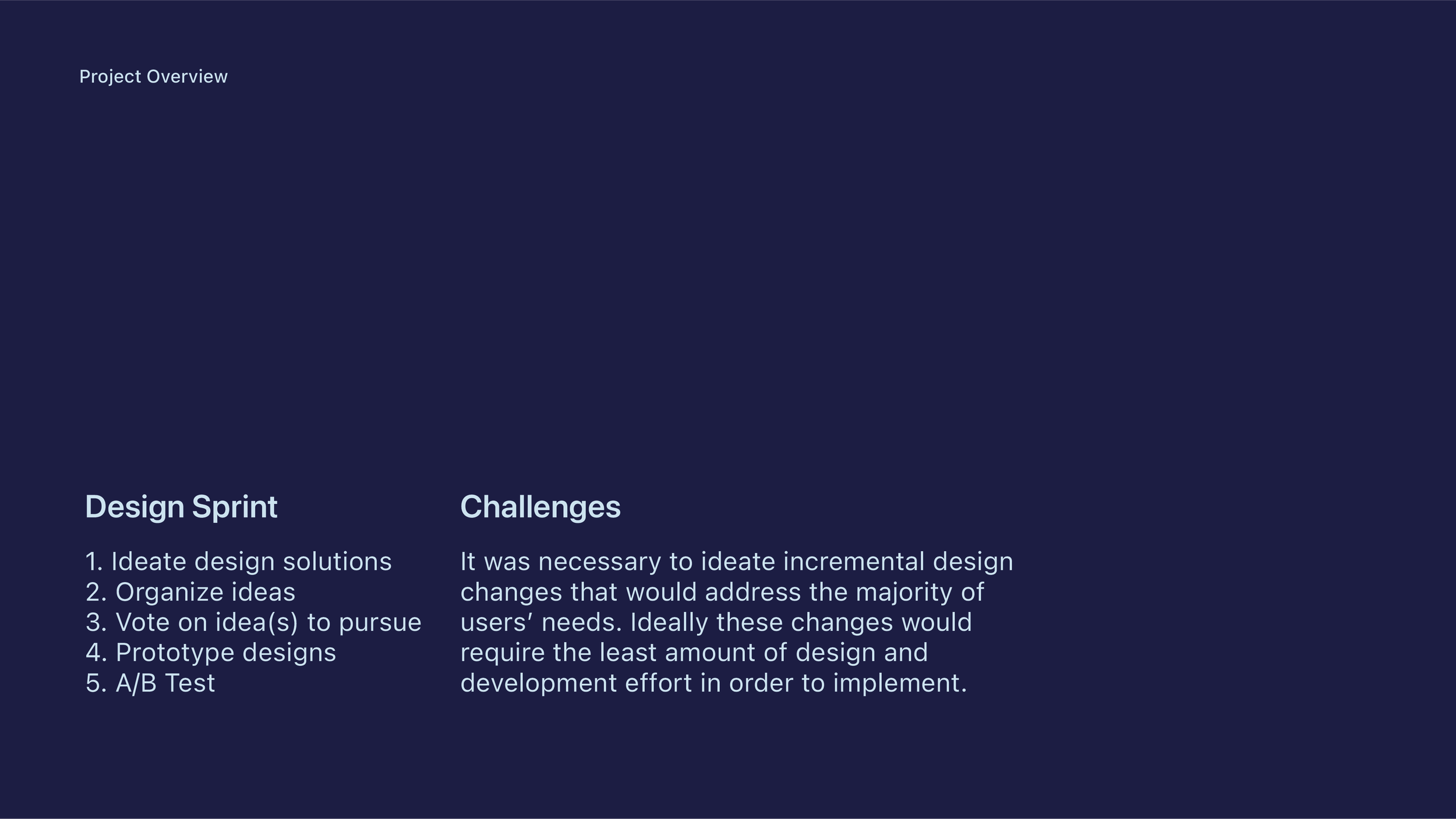
The design philosophy: low engineering investment, fast iteration, measurable impact.
ROLE
Lead Product Designer
SCOPE
E-commerce checkout, iterative design, A/B testing
STAGE
Series B: scaling phase, 1.5+ million customers at time of project
PROBLEM
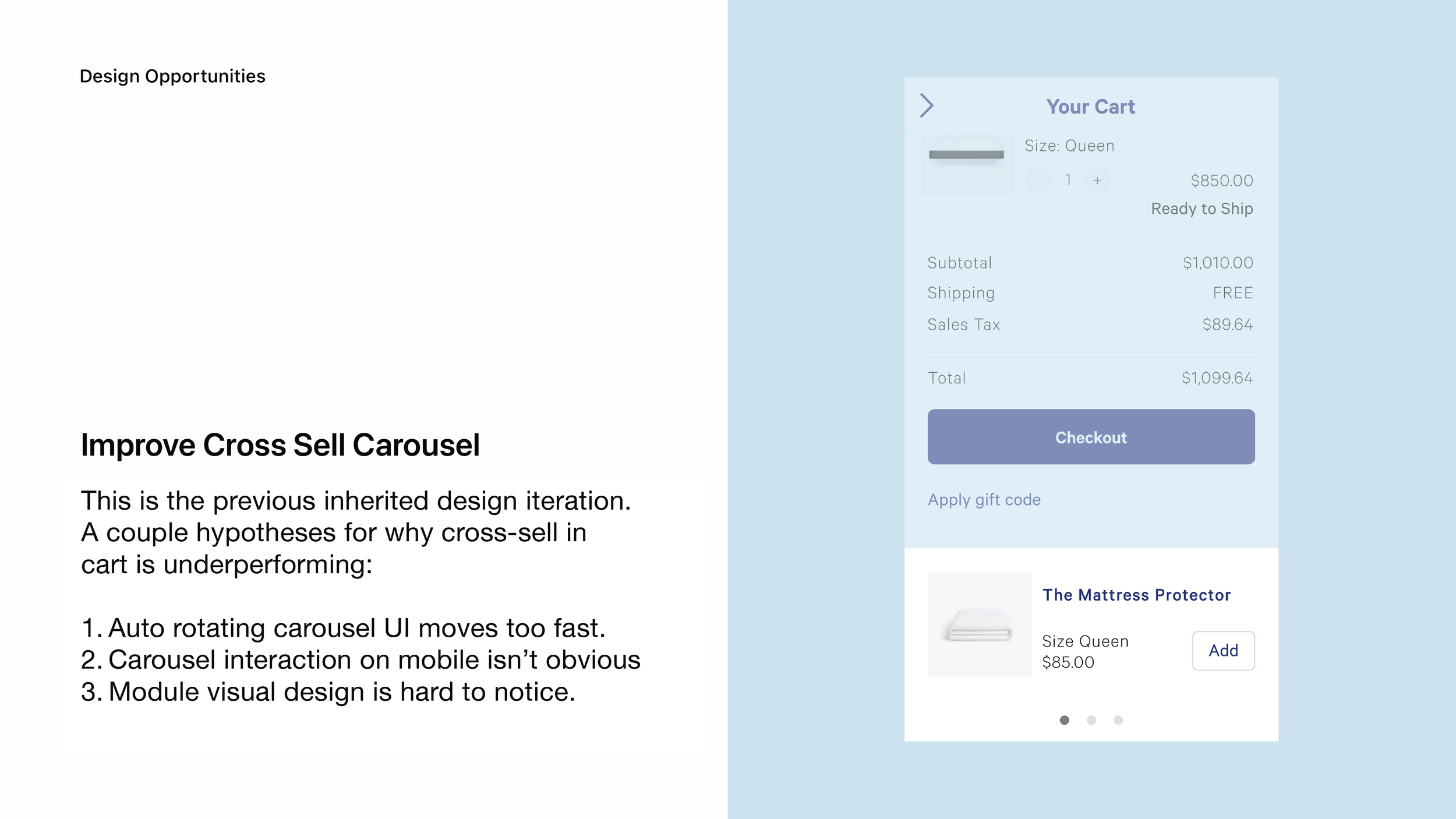
The existing cart cross-sell carousel was underperforming. An auto-rotating module with low visual contrast and unclear mobile interactions was generating poor attachment rates — a missed revenue opportunity at the highest-intent moment in the purchase journey.
The risk wasn't just lost revenue. A poorly designed cross-sell can increase checkout drop-off. Any redesign had to lift attachment without disrupting conversion.



STRATEGY
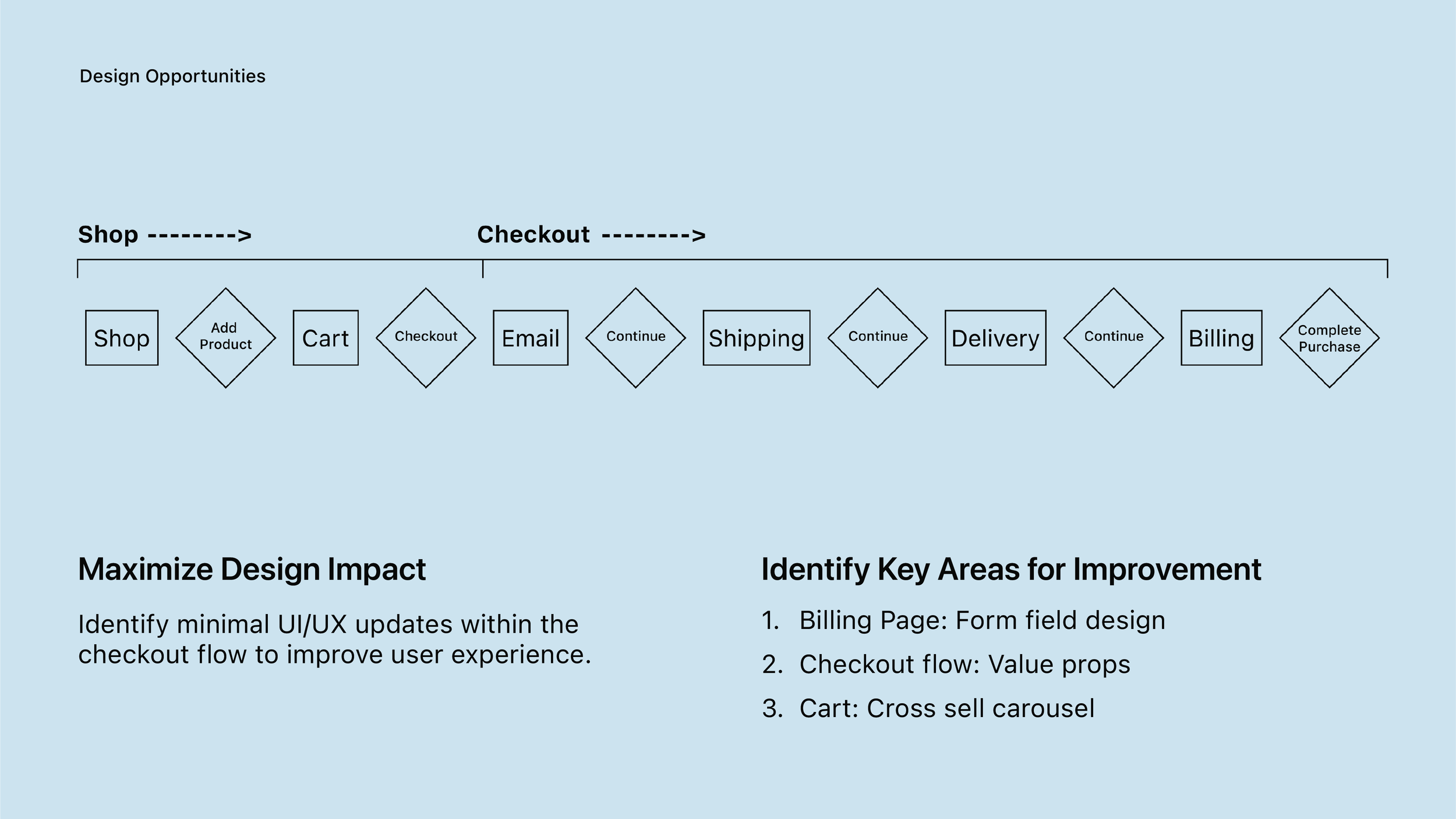
Before designing, I framed the opportunity against the constraint: minimal engineering lift, maximum measurable signal. The cart cross-sell won out over other checkout opportunities because it sits at peak purchase intent, is highly isolated for A/B testing, and has a clear, direct revenue metric.
DESIGN PROCESS
The existing carousel had three identifiable problems: it moved too fast for users to engage, the dot navigation pattern wasn't intuitive on mobile, and the card visual design didn't create enough contrast to attract attention in a high-cognitive-load moment (checkout).
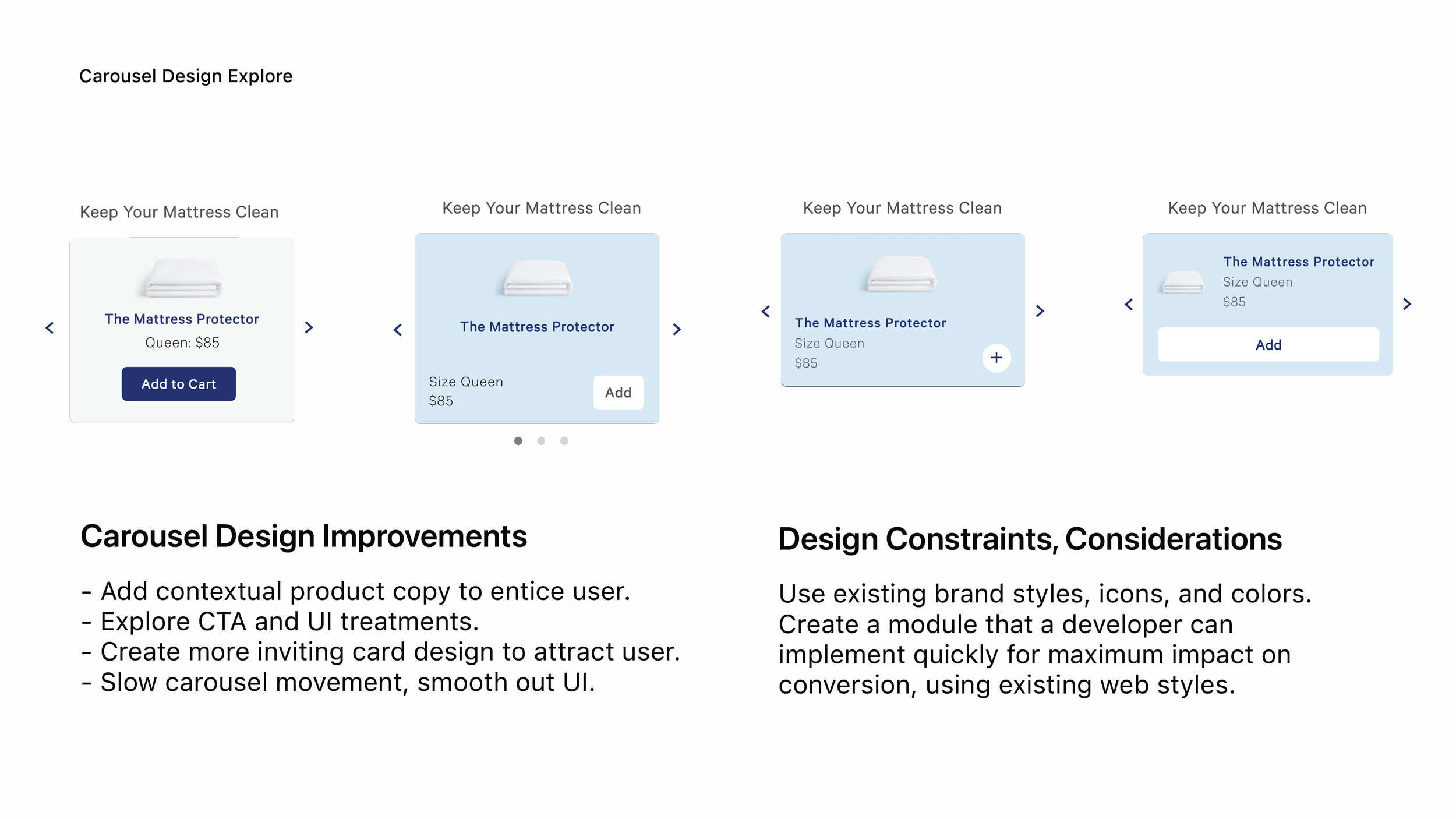
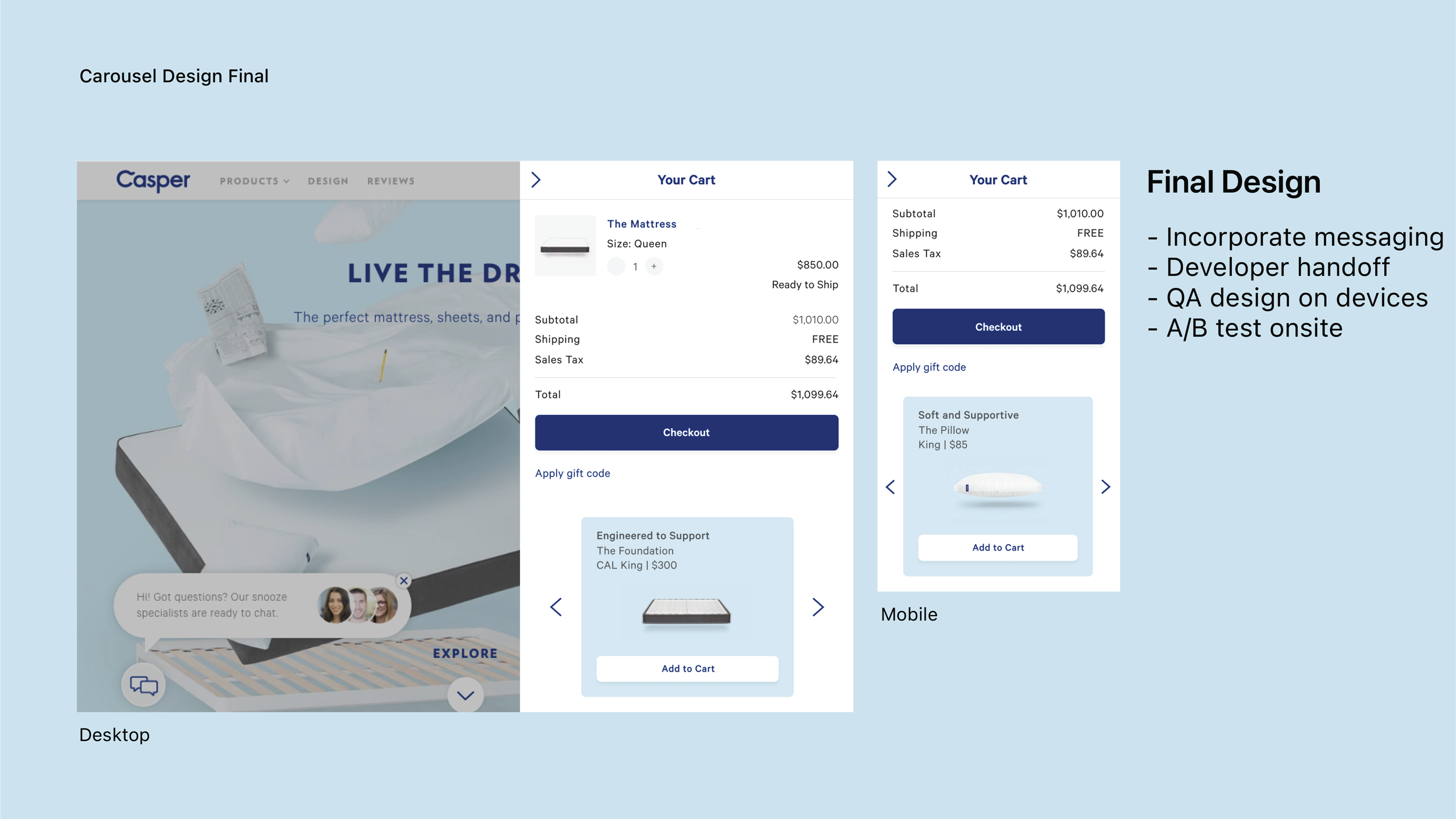
I explored multiple directions — visual card treatments, CTA hierarchy, contextual product copy, and interaction patterns including swipe/drag and peaking modules. More complex interactions were cut based on engineering constraints and timeline, which pushed me toward higher-impact surface-level changes: slowed carousel movement, arrow navigation replacing dot indicators, stronger card visual design, and contextual copy tailored to each product.
Every design decision was made with the A/B test in mind — isolating variables to produce clean signal.
OUTCOMES
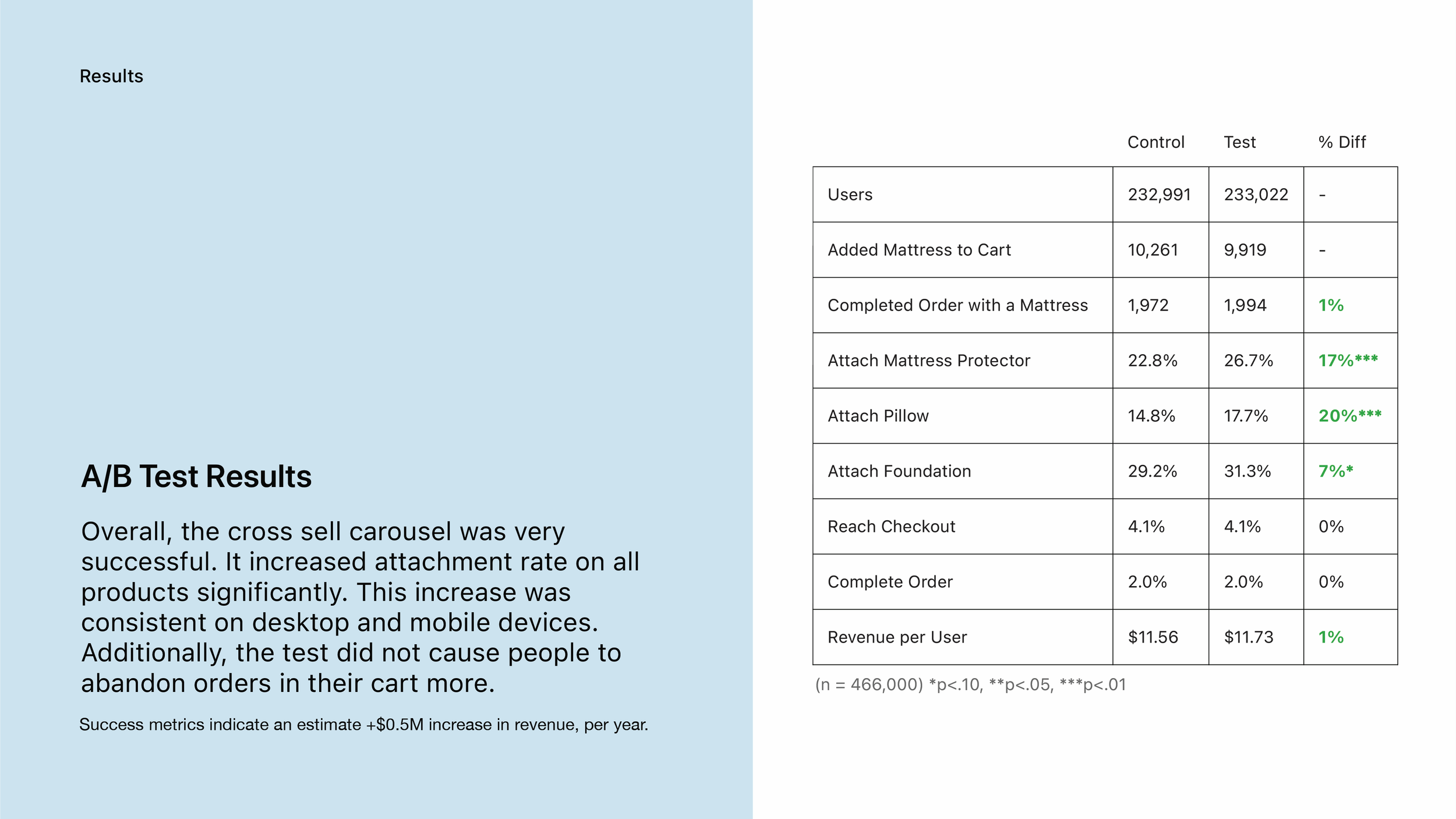
Tested against 466,000 users (statistically significant at p<.01 for primary metrics):
Mattress Protector attachment rate: +17%
Pillow attachment rate: +20%
Foundation attachment rate: +7%
Primary checkout conversion: unchanged (guardrail held)
Revenue per user: +1%
Projected annual revenue impact: $500K+
The guardrail metric — checkout completion — was unaffected, confirming the redesign increased cross-sell without introducing friction to the core journey.
KEY INSIGHT
Design is a growth lever — but only when it's measured. Intuition gets you to the hypothesis. The A/B test tells you if you're right.